Although Brisbane winters are mild, it gets cold enough that most people migrate indoors and leave their outdoor spaces sitting empty for three months.
That’s a waste of a good deck. The good news is it’s mostly a solvable problem. The right shelter, a heat source, and decent furniture changes how you use the space completely.
If you’re already planning a renovation or extension, now is a good time to think about how the outdoor area fits into that. Decisions made early in the design phase are a lot cheaper than retrofitting later. Here’s what’s worth considering.
Getting the orientation and shelter right
Before you think about furniture or heaters, get the fundamentals sorted. A north-facing outdoor space will catch more winter sun and stay naturally warmer through the day. This isn’t always possible depending on your block, but it’s worth factoring in if you have a choice.
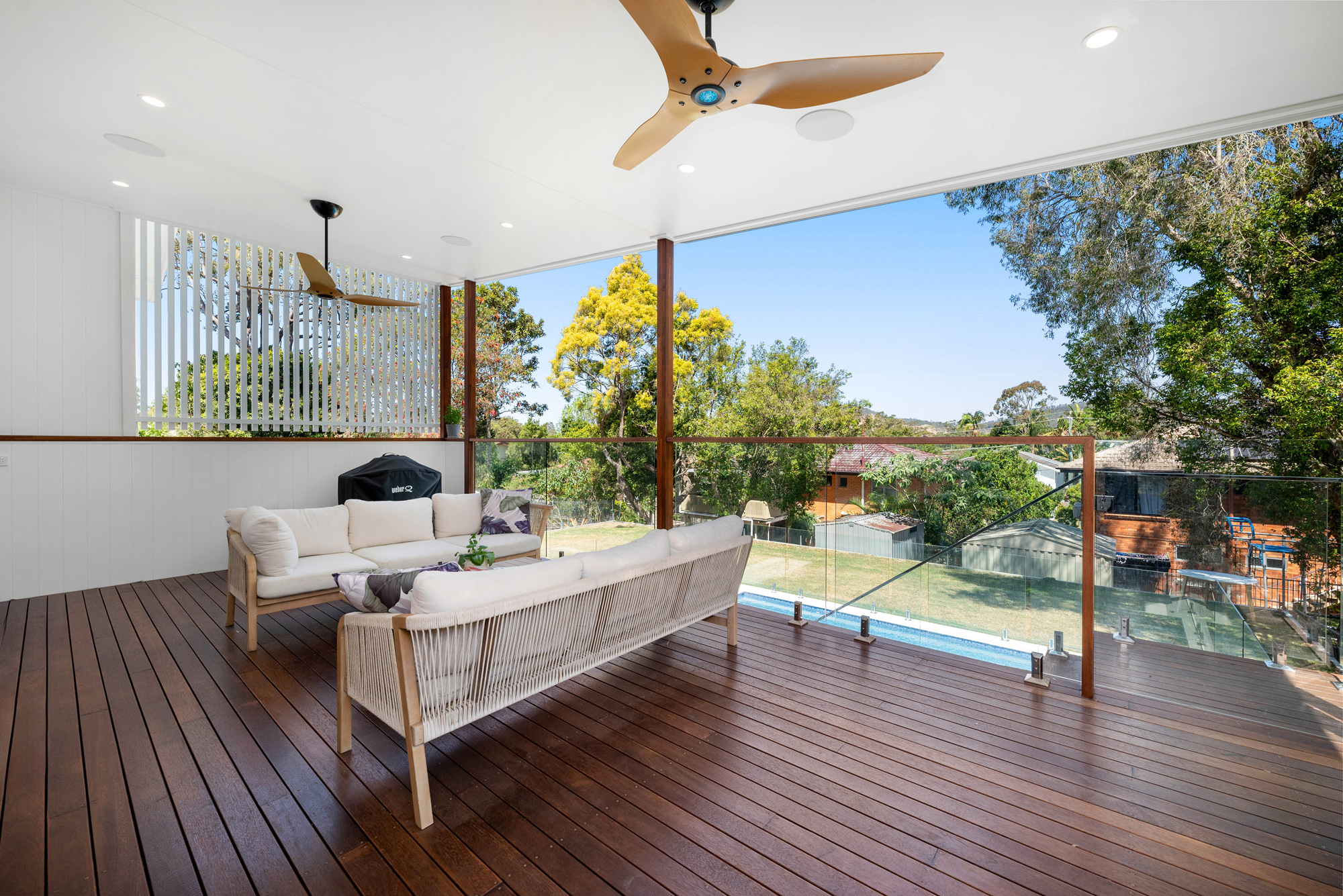
Shelter matters more than the heater. A covered area that blocks the south-westerly winds common in Brisbane winters will feel significantly warmer than an open deck at the same temperature. Fixed roofing is best for a permanent solution. Retractable awnings work well if you want flexibility. For full winter usability, adding cafe blinds or louvre panels on the windward side makes a real difference.
If you’re extending the house or raising it, this is the moment to think about integrating the outdoor space into the design properly. A covered alfresco that opens off the living area with wide stacker or bifold doors gives you the best of both: open it up in good weather, close it down when it’s cold.
Raised homes: the outdoor space you might already have
If you have a Queenslander or post-war home that’s been raised, or if you’re considering a house raising project, the space created underneath is one of the best opportunities for a covered outdoor area. The slab overhead provides natural shelter, the height is usually generous, and you’re not adding a separate structure to the backyard.
We’ve converted a lot of under-house areas into genuinely usable outdoor living rooms. The things that tend to make them work well are consistent flooring (polished concrete or timber decking both work), good lighting, and some form of enclosure on at least one or two sides to manage wind and create a sense of separation from the garden.
The under-house space does come with a few considerations worth knowing about. Ventilation matters, especially if you’re adding a gas heater or pizza oven. Depending on the level of enclosure, you may need building approval.
Heating: what actually works
What’s the best outdoor heating option for your space?
Infrared strip heaters are the most practical option for covered areas. They heat the people in the space rather than the air, which means they work even with some airflow. Wall or ceiling mounted, they’re out of the way, and the better models are quite subtle. This is what we’d suggest for most Brisbane outdoor areas.
Gas and electric patio heaters work, but they’re bulky and take up floor space. If you’ve got a larger, more open area where wall mounting isn’t an option, they’re fine. Just know you’ll be moving them around.
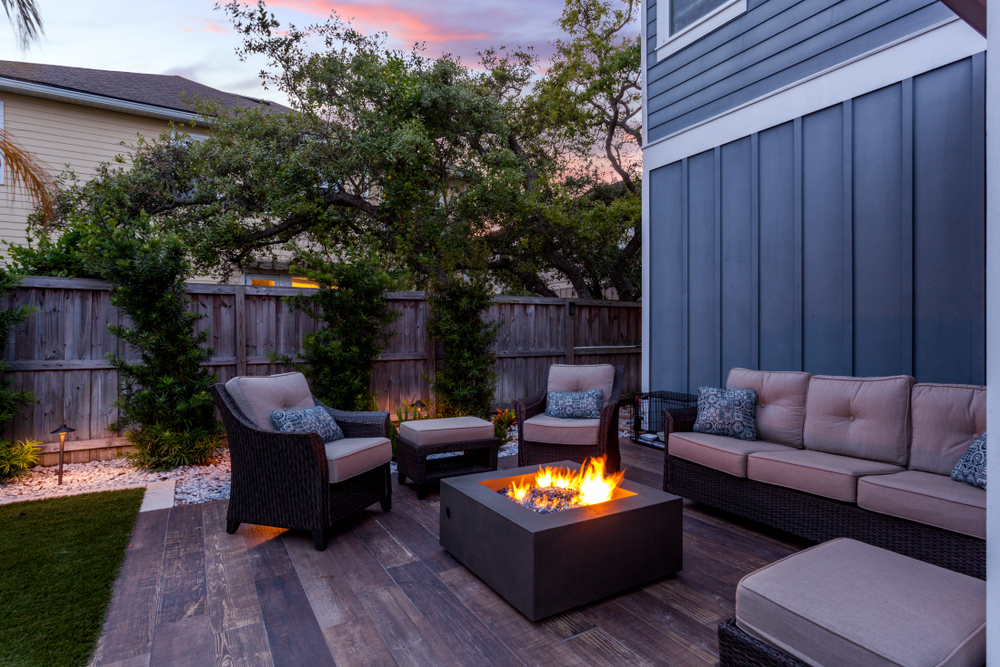
Outdoor fireplaces and fire pits are more about atmosphere than heat output. A built-in fireplace as part of an outdoor kitchen or entertainment wall can look excellent and does add some warmth, but if your main goal is keeping guests comfortable on a cold evening, it won’t do the job alone. Fire pits are similar: great to gather around, less useful as a primary heating strategy.
The indoor-outdoor connection
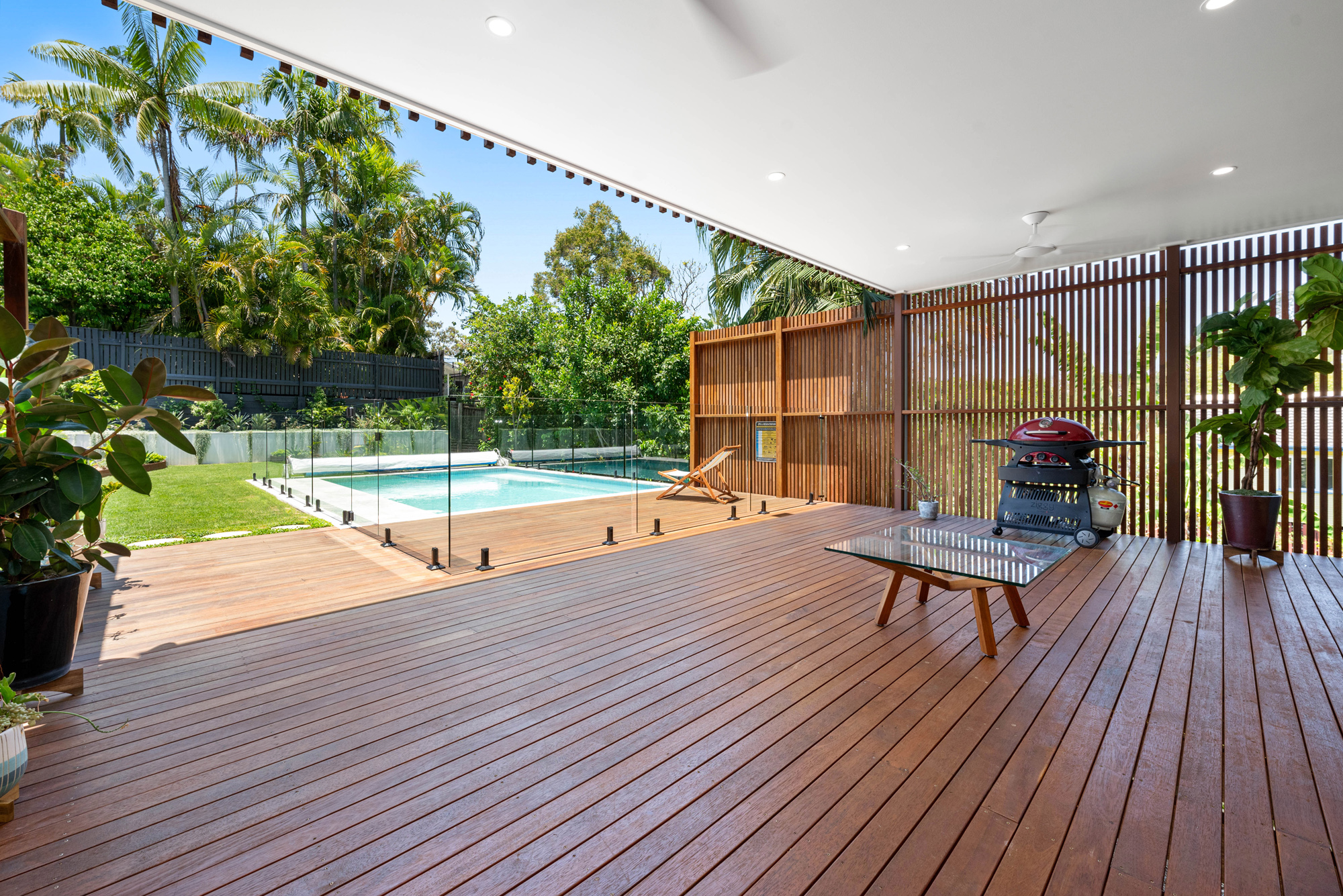
How you transition from inside the house to outside has a bigger impact on how much you use the outdoor space than most people expect.
Sliding doors do the job but create a clear separation. Stacker doors and bifolds open the whole wall and make the outdoor area feel like an extension of the living room. That psychological shift matters, especially in winter when going outside feels like more of a decision.
Floor height matters too. A seamless or near-flush transition between the indoor floor and the deck surface makes the space feel connected. A step down can create a subtle barrier that makes people less likely to drift outside.
If you’re doing any work to the living area as part of a renovation, it’s worth reviewing the outdoor connection at the same time. Even relatively small changes, like replacing a sliding door with a stacker or levelling a step, can change how the space is used.
Furniture, rugs, and making the space feel finished
For outdoor furniture in Queensland, weather resistance matters. We get enough humidity and UV that cheaper materials degrade fast. Powder-coated aluminium frames hold up well. Teak and hardwood are good if you’re prepared to oil them occasionally. Synthetic wicker is hit and miss depending on the brand and price point.
In winter specifically, cushion fabric matters more than people expect. Standard outdoor fabric is fine in summer, but in cooler weather it just feels cold to sit on. Investing in slightly heavier cushion covers, or having a separate set you bring out in winter, is a small thing that makes the space more comfortable.
Outdoor rugs over concrete or timber decking make a difference both visually and underfoot. They help the space feel more like a room. The main thing to look for is a rug that doesn’t trap moisture underneath, so check that it’s designed for outdoor use with a breathable backing.
Outdoor cooking and dining
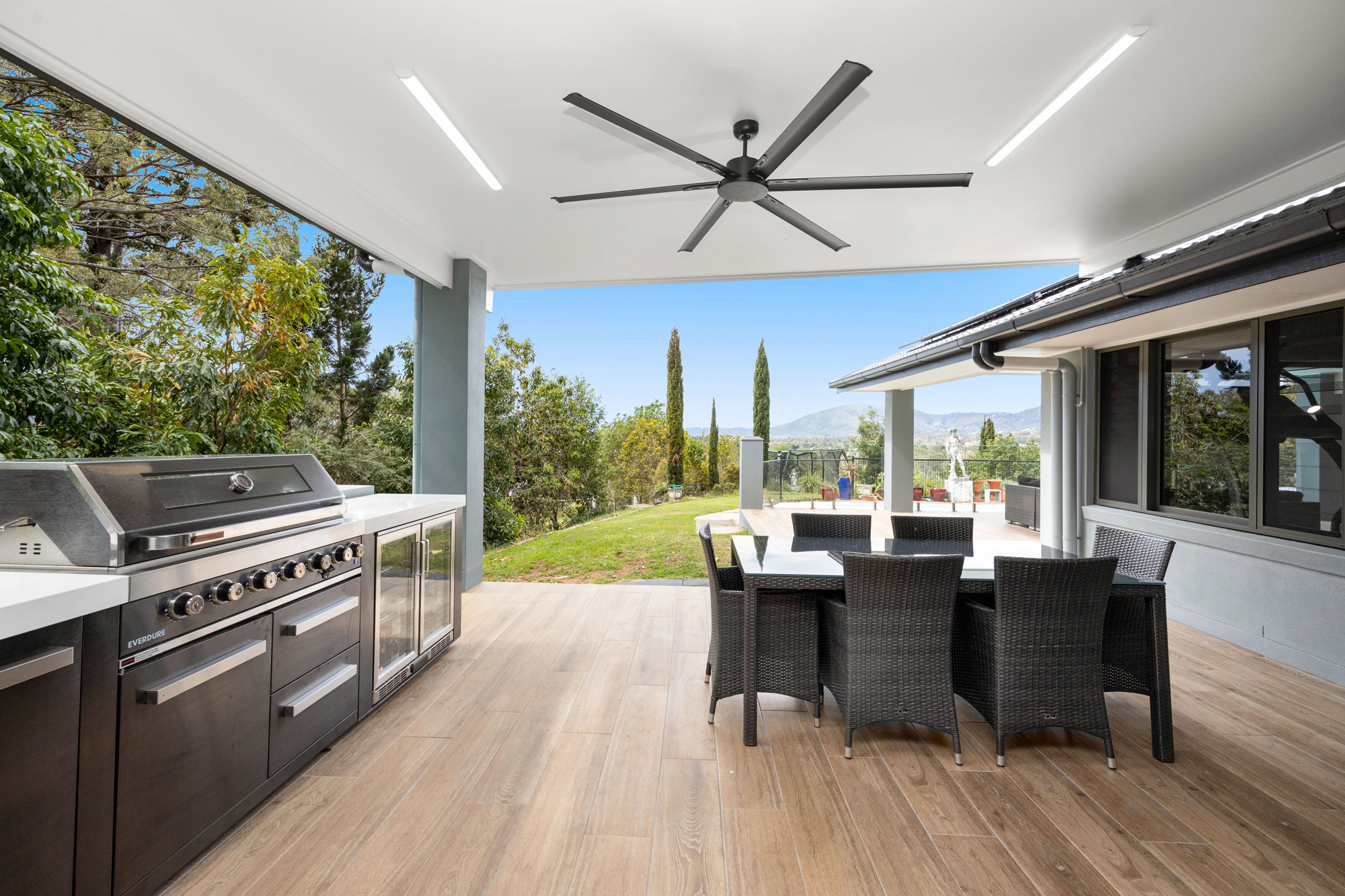
An outdoor kitchen is one of the more common upgrades we’re seeing in renovation projects right now, and it makes sense. In winter especially, having a heat source outside (even just a BBQ with a side burner) gives people a reason to stay out rather than retreating inside to cook.
A full built-in outdoor kitchen with a gas cooktop, sink, and under-bench storage is a serious investment. For most homeowners, a freestanding BBQ with some covered storage and a nearby dining table delivers most of the value at a fraction of the cost. The thing that makes the biggest difference is having enough bench space, somewhere to put things down while you’re cooking.
Lighting for winter evenings
Winter days are short, and if you want to use the space in the evening, lighting needs to be considered. The three things to get right are: enough general light to see by, task lighting for cooking or dining, and ambient lighting to make the space feel good.
For covered areas, recessed downlights or surface-mounted ceiling fittings give you general light without visual clutter. LED strip lighting under bench overhangs or along steps adds practical safety lighting and looks good. Solar garden lights work fine for path illumination but don’t have the output for anything more than that.
The colour temperature matters more outdoors than it does inside. Warm white (2700K to 3000K) is the right choice for living and dining areas. Cooler temperatures feel clinical in an outdoor setting at night.
Final Thoughts
Queensland winters are short, and the evenings only get genuinely cold for a few months. Most outdoor spaces sit empty through winter not because it’s too cold to be outside, but because they were designed for summer and nothing else. Getting the shelter, heating, and connection to the house right means you use the space year-round.