
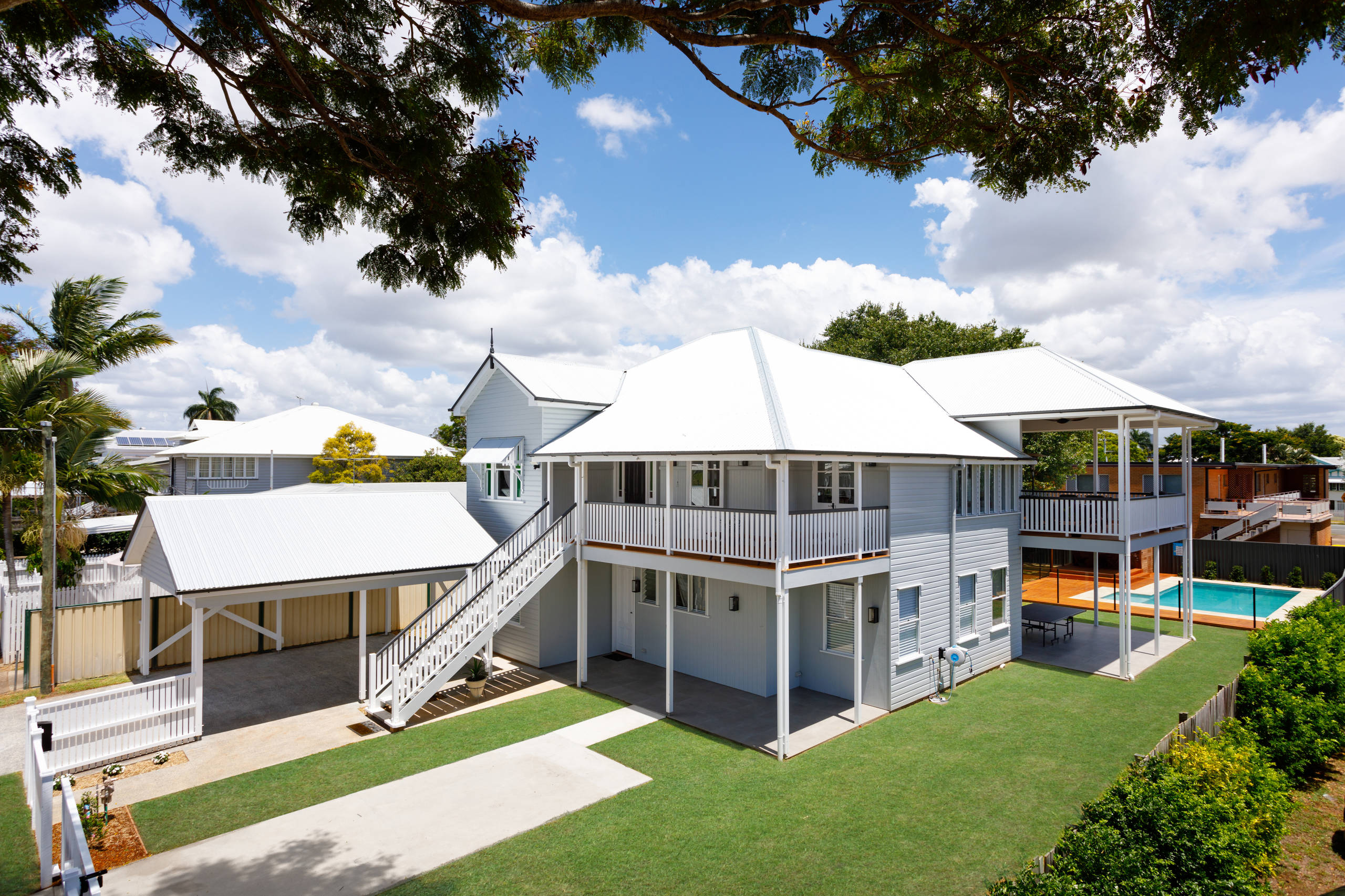
Thinking of renovating an older home in Brisbane? It may be protected under a heritage or character overlay, which will affect your renovation plans.
In Brisbane, an older home can be protected in two different ways. It can be a heritage place, protected for its own significance. Or it can sit in the traditional building character overlay, which protects whole streets of pre-1947 houses. Both affect what you can renovate, but heritage rules are stricter and work differently.
Quick Answer: How Each Overlay Affects A Renovation
- Heritage places: most work counts as development. Maintenance and minor work may fall under an exemption certificate, while larger changes need a development application.
- State heritage places: changes are assessed by the Queensland Government, not council.
- Character overlay: internal work is unlikely to need planning approval, but external extensions generally do.
- Character overlay: raising may not need planning approval if the new height stays at or under 9.5 metres and meets the code.
- Both: building approval is needed on top of any planning or heritage approval.
What Is The Difference Between A Heritage Overlay And A Character Overlay?
The Heritage overlay in Brisbane City Plan 2014 protects individual places with recognised heritage significance. These are local heritage places, listed by Brisbane City Council, and state heritage places, listed on the Queensland Heritage Register. Properties next to a heritage place can also be mapped in the overlay, so neighbouring work may be affected too.
The traditional building character overlay protects streets rather than single houses. It covers areas with intact groups of homes built in or before 1946. Under the old City Plan 2000 it was called a demolition control precinct, and many people still use that name.
Most Queenslanders and workers cottages are in the character overlay rather than heritage listed. Council also has a separate Pre-1911 building overlay for some of the city’s oldest houses.
How Do I Check If My House Is Heritage Listed Or In The Character Overlay?
Search your address on Brisbane City Council’s City Plan online mapping tool. It shows every zone and overlay that applies to your property, including heritage and character. An overlay can cover all or part of a lot, and more than one can apply.
If your home is a local heritage place, council’s Local Heritage Places Online site has its listing and the reasons it’s significant. State heritage places are listed on the Queensland Heritage Register. Check both before you buy or before your designer starts drawing.
Can You Renovate A Heritage Listed House In Brisbane?
Yes, but most work on a heritage place is regulated so its heritage significance is kept. Being heritage listed doesn’t freeze a house. It means the impact of your changes is assessed against what makes the place significant.
For local heritage places, council has three pathways depending on the size of the job.
- General Exemption Certificate. This covers maintenance and minor work, like repairs and repainting in a complementary colour scheme. If the work meets its conditions, there’s no application, fee or approval needed.
- Heritage Exemption Certificate. This is an approval for low-impact work that has no more than a minor effect on the place’s significance. You apply online, pay a fee and explain the impact of the work.
- Development application. This is for work with more than a minor impact, or for complex or large-scale changes.
State heritage places follow a separate process. Council can’t issue exemption certificates for them, so applications go to the Queensland Government.
What Does A Heritage Listing Mean For Extensions And Raising?
Extensions, raises and changes to the street-facing part of a heritage place will usually go beyond minor work. In practice, that means a development application, assessed on how the design affects the heritage significance of the place.
It doesn’t rule out adding space. Extensions toward the rear, set apart from the original house, often have less impact than changes to the front. A designer with heritage experience, or a heritage consultant, will know what’s likely to be supported for your particular property.
What Renovations Need Approval Under The Character Overlay?
Council generally requires a planning application for external extensions to houses in the character overlay. The plans need to comply with the Traditional building character (design) overlay code, plus the Dwelling house code or the small lot code.
If the extension removes part of a pre-1947 house, such as a rear section or an enclosed verandah, it may also be assessed against the demolition overlay code. Internal renovations, like a new kitchen or bathroom, are unlikely to need planning approval.
Can You Raise Or Build Under A House In The Character Overlay?
Often, yes. Raising a house in the character overlay can count as minor building work that doesn’t need planning approval. The new height can’t exceed 9.5 metres, and the raise has to meet the other requirements.
Raising and building underneath is one of the most common ways we add space to character homes, because the house keeps its presence on the street. How the lower level is finished and how the front looks after the raise both affect whether the design fits the code.
Can You Knock Down A Heritage Or Pre-1947 House In Brisbane?
It’s difficult in both cases. Demolishing a heritage place would have a major impact on its significance, so approval is unlikely. Demolishing a pre-1947 house in the character overlay needs approval too, and council generally won’t give it unless the house doesn’t contribute to the street’s character.
Several owners have taken refusals to the Planning and Environment Court, with mixed results. For most owners, renovating, raising and extending is the realistic way to get the space they need.
What Does A Heritage Or Character Overlay Mean For Your Renovation Plans?
Mostly it affects design and timing. Plans need to suit the rules from the start, and approvals have to be in place before building approval and construction can begin. A heritage place usually takes longer than a character home, so allow for that in your timeline.
In our experience, the projects that run smoothly are the ones where the owner has worked through the overlay with their designer before coming to a builder. By then the scope is clear, and we can price and program the job properly.
Renovating a Heritage or Character Home with JM Homes
We renovate, raise and extend Queenslanders and pre-war homes across Brisbane. If you have approved plans or drawings in progress and want to talk through construction cost, timing and delivery, get in touch. We’re currently booking projects into 2027.

Frequently Asked Questions
Is being heritage listed the same as being in the character overlay?
No. Heritage listing protects an individual place for its own significance. The character overlay protects the traditional look of whole streets, and its rules are generally less strict.
Can I paint a heritage listed house?
For a local heritage place, usually yes. Council’s General Exemption Certificate covers preparation and painting in a complementary colour scheme, provided you meet its conditions.
Do I need approval for minor repairs on a heritage place?
Often not. Maintenance and minor repairs to a local heritage place may be covered by the General Exemption Certificate. Low-impact work outside it needs a Heritage Exemption Certificate.
Can I raise my house in the character overlay?
Often, yes. Raising may not need planning approval if the new height stays at or under 9.5 metres and meets the code’s other requirements. Building approval is still required.
How do I find out if my house is heritage listed?
Search your address on council’s City Plan online mapping. Local heritage places are also listed on Local Heritage Places Online, and state heritage places on the Queensland Heritage Register.